What is Low Voltage Switchgear?
Low voltage switchgear encompasses a range of electrical devices used in power distribution at voltages typically rated up to 600V AC. It is a crucial element in electrical systems, facilitating the safe and effective management of electrical energy across various applications, including residential, commercial, and industrial settings.
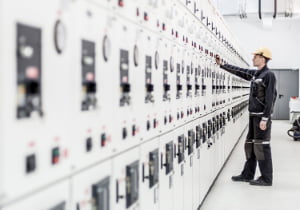
The key functions of low voltage switchgear include:
- Control: Enabling the operation and regulation of electrical circuits and equipment.
- Protection: Shielding electrical systems from overcurrents, short circuits, and faults.
- Isolation: Allowing safe disconnection of equipment for maintenance or emergencies.
Essential components of low voltage switchgear include:
- Circuit Breakers: Automatic devices that stop the flow of electricity during fault conditions, preventing equipment damage and ensuring safety.
- Busbars: Conductive bars used for distributing electrical power to varied circuits within the switchgear.
- Enclosures: Protective cases that shield internal components from dust, environmental elements, and accidental contact.
A well-designed low voltage switchgear system optimizes electricity distribution while upholding safety and reliability, which are vital in industrial and commercial operations.
Key Standards and Classifications
Grasping the essential standards and classifications that regulate low voltage switchgear is critical for ensuring safety and compliance. Notably, two significant standards are UL 1558 and UL 891, each addressing different types of equipment.
UL 1558 specifically pertains to low voltage switchgear used in electrical distribution systems for circuit protection and control. This standard emphasizes the performance and durability of switchgear assemblies, focusing on safety testing and operational reliability. Conversely, UL 891 relates to switchboards, which serve a similar purpose but differ in configuration and design, highlighting assembly requirements for panelboards. The main distinction lies in their application: UL 1558 is designed for higher current ratings in factory-assembled units, while UL 891 addresses modular switchboard components.
Beyond UL standards, ANSI/IEEE compliance is crucial for certifying low voltage switchgear. ANSI standards outline testing protocols to ensure switchgear operates under specified conditions, while IEEE standards focus on performance specifications, aiding manufacturers in achieving product reliability.
Motor Control Centers (MCCs), classified under UL 845, support motor control applications, ensuring reliability and safety in industrial environments. UL 845 addresses the construction of assemblies for motor control and includes thorough testing methods for both components and complete assemblies.
| Standard | Application | Focus |
|---|---|---|
| UL 1558 | Low Voltage Switchgear | Performance and durability |
| UL 891 | Switchboards | Assembly requirements |
| UL 845 | Motor Control Centers | Motor control safety and assembly |
By adhering to these standards, manufacturers can ensure that their Low Voltage Switchgear meets regulatory requirements while effectively operating in various applications.
Switchgear vs. Switchboards: Making the Right Choice
Shifting from standards to practical implications, understanding the differences between switchgear and switchboards is essential for making informed decisions tailored to specific applications. Each system possesses unique characteristics, benefits, and constraints that influence performance, costs, and maintenance requirements.
Key Characteristics and Applications:
- Switchgear: Generally intended for medium to high voltage applications, switchgear offers advanced protection, control, and monitoring capabilities. It is commonly utilized in industrial settings, substations, and large commercial infrastructures where system reliability is critical.
- Switchboards: Typically found in low voltage applications, switchboards act as the main distribution point for a facility’s electrical power. They are predominantly used in commercial buildings and smaller industrial settings, prioritizing space and cost efficiency.
Cost Considerations and Performance Differences:
Switchgear often requires a higher initial investment due to advanced components and enhanced protection features. In contrast, switchboards provide a more budget-friendly option for low voltage applications, making them attractive for cost-sensitive projects. However, it is crucial to consider the potential for future upgrades or maintenance expenses, as switchgear may offer longer-term benefits in operational reliability.
Maintenance Access and Layout Implications:
Maintenance accessibility is another vital factor. Switchgear usually demands more space and specific arrangements to facilitate necessary maintenance and operation access. Conversely, switchboards are more accessible and simpler to service, which can diminish downtime during repairs.
Ultimately, the choice between switchgear and switchboards should be guided by specific application requirements, budget considerations, and plans for future expansion. Recognizing these distinctions ensures optimized performance and longevity of electrical systems.
Critical Safety Features: Arc Resistant Technology
In terms of safety, arc-resistant technology significantly contributes to enhancing the safety profile of low voltage switchgear. Arc flash hazards pose severe risks, including injuries, equipment damage, and potential fatalities. An arc flash occurs when an electrical fault leads to a rapid energy release, resulting in explosive heat and light. Therefore, understanding and mitigating these hazards is crucial for facilities relying on electrical systems.
There are primarily two types of arc-resistant designs in low voltage switchgear: total protective enclosures and locally contained explosion vents. Total protective enclosures are crafted to contain the arc flash and channel the resulting pressure and energy away from personnel and equipment, while locally contained explosion vents are strategically located to relieve pressure and minimize risks to nearby operators.
Additionally, arc-resistant technologies can be categorized into two primary features: passive and active arc mitigation strategies.
- Passive arc mitigation employs structural designs to create physical barriers around electrical components, minimizing the likelihood of arc flash incidents affecting personnel. This includes reinforced barriers and compartmentalized construction.
- Active arc mitigation utilizes real-time monitoring and control systems that detect anomalies, triggering protective devices to mitigate the effects of an arc flash instantly, thereby enhancing safety.
Investing in low voltage switchgear equipped with arc-resistant technology is not merely a compliance requirement but also a proactive measure to protect employees and assets, ultimately contributing to enhanced operational efficiency and reliability.
Enclosure Types and Installation Environments
Diving deeper into design considerations, the selection of enclosure type in low voltage switchgear is vital for ensuring reliable performance and protection across diverse environments. The National Electrical Manufacturers Association (NEMA) provides a standardized classification system that assists in determining the most suitable enclosure for specific applications. Below is an overview of common NEMA enclosure types:
- NEMA 1: Generally intended for indoor use, this enclosure offers basic protection against dust and accidental contact, unsuitable for outdoor applications or moist environments.
- NEMA 3R: Designed for outdoor applications, this enclosure protects against rain, wind, dust, and ice, making it ideal for above-ground installations with occasional moisture exposure.
- NEMA 4: Often utilized in industrial settings, this enclosure safeguards against water splashes, hose-directed water, and dust, perfect for washdown conditions.
- NEMA 12: This enclosure type is appropriate for indoor applications requiring protection from dirt, dust, and dripping non-corrosive liquids, commonly found in manufacturing facilities.
- NEMA 13: Similar to NEMA 12, this enclosure is suitable for environments with oil or coolant presence, providing additional protection against contaminants.
To ensure optimal performance, it is essential to consider the specific installation environment. For indoor installations, factors such as available space, ambient temperature, and potential corrosive material exposure must be assessed. Conversely, outdoor installations require enclosures capable of withstanding weather variables and environmental stressors. Particularly harsh conditions such as corrosive atmospheres and areas with high vibration may necessitate custom solutions or enhanced protective coatings on standard enclosures.
In conclusion, selecting the correct enclosure type according to the intended environment is crucial for ensuring the longevity and safety of low voltage switchgear systems.
Buying Guide: How to Specify Low Voltage Switchgear
Having explored various design aspects, it is critical to weigh several criteria when specifying low voltage switchgear to guarantee proper functionality and safety in your electrical system. The following points detail essential considerations to guide your purchasing decision:
- Amperage and Voltage Ratings: Evaluate the operational requirements by analyzing the maximum load and operational voltage of your system. Selecting switchgear that can sufficiently handle these parameters is crucial. For instance, choosing switchgear with an amperage rating greater than the anticipated demand provides a safety margin and accommodates potential future load increases.
- Short-Circuit Interrupting Ratings (kAIC): Understanding the short-circuit current rating is vital. The kAIC rating denotes the switchgear’s capacity to interrupt fault currents without incurring damage. Ensure that the selected switchgear exhibits a kAIC rating equal to or exceeding the maximum short-circuit current of your electrical network to avert catastrophic failures.
- Customization Options: Look for switchgear that offers customization to align with specific operational needs. Features such as integrated controls, feeders, and communication capabilities can enhance functionality. Tailored solutions often facilitate easier integration into existing systems and future scalability.
To simplify the selection process, consider this checklist:
- Identify specific amperage and voltage requirements.
- Evaluate the necessary short-circuit interrupting rating based on the application.
- Assess the need for customized features such as controls and connectivity.
- Compare manufacturers for quality assurances, warranties, and after-sales support.
- Review compliance with local and international standards.
Focusing on these criteria will ensure that your investment in low voltage switchgear aligns with operational demands while enhancing the safety and reliability of your electrical systems.
Maintenance and Lifecycle Management
Shifting to long-term care, effective maintenance and lifecycle management are essential for ensuring the reliability and longevity of low voltage switchgear. Implementing a proactive maintenance strategy minimizes unexpected failures and optimizes the performance of electrical systems.
Preventative maintenance best practices encompass regular inspections, cleaning, and timely replacement of worn components. It is vital to adhere to manufacturer guidelines and use specialized tools for adjustments and calibrations. Routine tasks include checking bolted connections, assessing insulation integrity, and evaluating the functionality of protective devices.
The importance of regular testing and compliance with standards cannot be overstated. Routine testing helps identify potential issues before they escalate into costly repairs or safety incidents. Adhering to national and international standards like IEC 61439 and UL 1558 ensures safety and performance while maintaining operational efficiency. Scheduled testing should address functionality, thermal imaging, and insulation resistance to create a comprehensive assessment of equipment health.
As equipment ages, operators face the crucial decision of whether to retrofit or replace their switchgear. Determining when to consider retrofitting versus replacing equipment relies on factors including the current system’s condition, technological advancements, and evolving operational needs. Upgrading old systems with modern components can extend their lifespan and improve performance; however, if the switchgear frequently requires repairs or poses safety concerns, replacement may be the wiser option.
To facilitate a structured maintenance approach, consider implementing a maintenance schedule template or checklist that encompasses:
- Monthly inspections for visible wear and tear.
- Quarterly testing of protective relays and performance metrics.
- Annual thermal imaging scans and insulation testing.
- Five-year comprehensive evaluation and overhaul planning.
Ultimately, by adhering to best practices in maintenance and lifecycle management, organizations can ensure the ongoing safety, efficiency, and reliability of their low voltage switchgear systems.
FAQs (People Also Ask)
In conclusion, low voltage switchgear is integral to maintaining safe and efficient electrical distribution. Below are answers to some frequently asked questions regarding this critical equipment:
- What is the voltage range for low voltage switchgear? Low voltage switchgear typically operates within a voltage range of 1kV to 1.5kV. This classification is essential for ensuring the proper selection and application of equipment in various electrical systems.
- What is the difference between metal-clad and metal-enclosed switchgear? Metal-clad switchgear provides enhanced protection with a fully enclosed structure capable of withstanding high short-circuit forces. In contrast, metal-enclosed switchgear is designed for applications where space is limited, offering similar functions but with potentially less robust protection.
- How often should low voltage switchgear be tested? It is advisable to have low voltage switchgear tested at least once a year. Regular testing identifies potential issues early and maintains compliance with relevant safety standards.
- Why is SF6 commonly used in switchgear? SF6 (sulfur hexafluoride) is utilized in switchgear for its exceptional insulating properties and ability to extinguish electrical arcs. It boosts operational reliability, significantly reduces maintenance times, and extends equipment lifespan.
- What are the key safety considerations? Key safety considerations include ensuring proper grounding, regular maintenance, monitoring environmental conditions, and compliance with local and international standards to minimize risks associated with electrical faults.
- What is the lifespan of low voltage switchgear? The typical lifespan of low voltage switchgear ranges from 20 to 30 years, depending on factors such as usage, maintenance, and environmental conditions.