What is Medium Voltage Switchgear?
Medium voltage switchgear is an essential component of electrical distribution systems, typically defined as equipment operating within a voltage range of 1 kV to 38 kV. It serves multiple functions to ensure the reliable and efficient distribution of electrical power, making it crucial in industrial, commercial, and utility facilities.
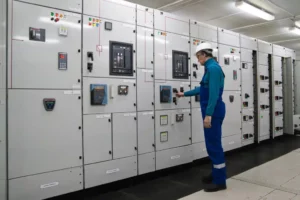
The core functions of medium voltage switchgear can be divided into three main categories:
- Protection: Designed to safeguard electrical circuits and equipment from overloads, short circuits, and faults, preventing damage while ensuring safety.
- Control: Provides operators with the capability to manage the flow of electricity within the network, including the ability to switch on or off, adjust load levels, and control generator inputs.
- Isolation: Allows for safe and effective isolation of sections of the power distribution system for maintenance or during fault conditions, minimizing risk to personnel and equipment.
Within the power grid ecosystem, medium voltage switchgear serves as a bridge between high voltage transmission systems and low voltage distribution systems. This strategic placement enhances operational dependability and plays a vital role in maintaining the stability of electrical grids, facilitating reliable service delivery in urban infrastructures and industrial operations alike. Consequently, understanding the different types of medium voltage switchgear is imperative for any electrical project.
Key Classifications of Medium Voltage Switchgear
Medium voltage switchgear is critical for electrical distribution and management, providing safety, reliability, and efficiency. The choice of switchgear can significantly impact performance and operational costs. Below, we explore the three primary classifications of medium voltage switchgear: Air-Insulated Switchgear (AIS), Gas-Insulated Switchgear (GIS), and Solid Insulated Switchgear (SIS).
- Air-Insulated Switchgear (AIS): This type utilizes air as an insulating medium and is characterized by its robust design and ease of maintenance. It is often employed in substations and industrial applications where space is not a constraint. AIS systems are suitable for voltages up to 36kV and are well-known for their cost-effectiveness and reliability. However, they require more space than other technologies and are more exposed to environmental conditions.
- Gas-Insulated Switchgear (GIS): Utilizing sulfur hexafluoride (SF6) gas for insulation and arc extinction, GIS allows for a more compact design compared to AIS. GIS’s primary benefits include a reduced footprint, enhanced safety, and lower maintenance needs. It is ideal for urban environments where space is limited and for applications in harsh conditions. Although the initial investment is greater, long-term operational efficiency often justifies the cost, making it a preferred choice for modern electrical infrastructure.
- Solid Insulated Switchgear (SIS): Emerging as a progressive alternative, SIS relies on solid insulation materials for dependable performance. This technology is gaining popularity due to its environmental advantages, as it eliminates the use of harmful gases. SIS systems are compact and require minimal maintenance while ensuring high levels of safety. With the growing emphasis on sustainability, SIS is expected to gain prevalence across various sectors.
Below is a comparative summary of these switchgear types based on footprint and maintenance:
| Type | Footprint | Maintenance |
|---|---|---|
| AIS | Large | Moderate |
| GIS | Compact | Low |
| SIS | Compact | Very Low |
Selecting the appropriate type of medium voltage switchgear is essential for optimizing performance and ensuring safety in electrical systems. This selection process must consider the specific design and operational needs of each application.
Understanding Metal-Clad vs. Metal-Enclosed Switchgear
In the realm of medium voltage switchgear, distinguishing between metal-clad and metal-enclosed switchgear is crucial for informed decision-making. Each type serves unique functions and features tailored to various applications.
Metal-Clad Switchgear is characterized by robust construction and enhanced safety features. It typically includes multiple compartments, each housing different components such as circuit breakers, bus bars, and protective devices. This design facilitates easier maintenance and ensures safety by containing potential faults within designated sections. Metal-clad switchgear commonly adheres to ANSI standards, offering high insulation levels and a variety of voltage ratings.
Conversely, Metal-Enclosed Switchgear presents a more streamlined structure, with all components enclosed within a single metal cabinet. This design simplifies installation and offers space savings yet generally features less compartmentalization than its metal-clad counterpart. Metal-enclosed switchgear is often selected for its cost-effectiveness and is suitable for applications with lower fault current levels. It meets both ANSI and IEEE standards, ensuring reliability for specific environments.
The key differences in safety ratings and compartmentalization between the two types can be summarized as follows:
| Feature | Metal-Clad Switchgear | Metal-Enclosed Switchgear |
|---|---|---|
| Construction | Multi-compartment | Single enclosure |
| Maintenance | More accessible, safer | Less accessible |
| Use Cases | High fault currents | Lower fault currents |
| Standards | ANSI compliant | ANSI and IEEE compliant |
While both metal-clad and metal-enclosed switchgear provide valuable solutions for medium voltage applications, understanding their distinct features and safety benefits will assist in selecting the appropriate type for your project needs.
Essential Components of Medium Voltage Switchgear
Medium voltage switchgear is a critical part of electrical distribution systems, serving as the interface for controlling, protecting, and isolating electrical equipment. Understanding the essential components of switchgear helps professionals choose the right configurations for specific applications. Below are the vital elements of medium voltage switchgear.
- Circuit Breakers: Fundamental for protecting electrical circuits from overloads and short circuits, circuit breakers come in various types, including:
- Vacuum Circuit Breakers (VCBs): These use a vacuum medium to extinguish the arc and are known for their reliability and compact design.
- Load Break Switches (LBS): These devices enable the safe interruption of current flow and are typically used for isolating circuits during maintenance.
- Busbars: Conductors that serve as the main pathways for electric current within switchgear assemblies. They provide a robust and rigid means of connecting various components, ensuring minimal losses. The configuration of busbars can vary, with options such as:
- Single busbar systems
- Double busbar systems for enhanced reliability
- Protection and Control Devices: Including relays, current transformers (CTs), and voltage transformers (VTs), which are crucial for monitoring and protecting the electrical system.
- Relays: Devices that detect faults and signal circuit breakers to disconnect the electrical supply.
- Current Transformers (CTs): Used to measure current and provide feedback to protection devices.
- Voltage Transformers (VTs): Step down high voltages for safe instrumentation and relay purposes.
Understanding these essential components enables engineers and technicians to make informed decisions when configuring medium voltage switchgear, ensuring a safe and efficient electrical distribution system. With this knowledge, professionals can tailor solutions that align with specific project requirements.
Applications and Use Cases of Medium Voltage Switchgear
Medium voltage switchgear plays a vital role in various sectors, providing reliable and safe control of electrical systems. Its applications span utilities, industrial settings, and the renewable energy sector, each with unique requirements and considerations. This diversity illustrates the adaptability and significance of medium voltage switchgear across different environments.
In utility companies and substations, medium voltage switchgear is essential for voltage regulation and load management. It serves as the backbone of electricity distribution, ensuring stable and efficient power delivery to residential and commercial customers. For instance, a notable case study involves the installation of medium voltage switchgear at a major urban substation that enhanced the grid’s reliability and facilitated the integration of distributed energy resources.
Industrial settings, such as manufacturing facilities and data centers, also leverage medium voltage switchgear. In these environments, it helps manage substantial electrical loads, ensuring that sensitive equipment operates without interruption. A prominent example includes a data center that implemented medium voltage switchgear to optimize its power distribution, achieving significant improvements in energy efficiency and operational resilience.
The role of medium voltage switchgear in renewable energy integration is becoming increasingly vital, especially with the rise of solar and wind energy projects. These facilities often require robust switchgear to manage fluctuating loads and ensure smooth energy output. For instance, a large solar farm utilized medium voltage switchgear to effectively handle the connection between its photovoltaic panels and the grid, demonstrating how medium voltage systems can support clean energy initiatives while maintaining system stability.
In light of these diverse applications, medium voltage switchgear is indispensable across various industries due to its ability to enhance electrical distribution systems. Its usage in utilities, industrial environments, and renewable energy integrations reflects a growing trend toward more efficient and reliable power management solutions.
Buying Guide: How to Select the Right MV Switchgear
When selecting medium voltage (MV) switchgear, engineers and facility managers must consider various specifications and features to ensure optimal performance, safety, and compliance. The following framework provides essential points to guide the purchasing decision. By being thorough in evaluation, buyers can ensure they make sound investments.
- Key Specifications:
- Voltage Rating: Ensure the switchgear is rated for the specific voltage levels of your application, typically ranging from 1 kV to 38 kV.
- Current Rating: Determine the normal operating current, considering load requirements and potential future expansions.
- Short Circuit Withstanding: Select switchgear that can handle expected short-circuit currents based on fault analysis to optimize operational safety.
- Enclosure Type Considerations:
- Indoor Switchgear: Ideally suited for controlled environments, offering protection from external elements.
- Outdoor Switchgear: Designed to withstand weather conditions, suitable for substations or remote installations.
- Safety Features and Compliance Standards:
- Ensure that the switchgear adheres to relevant standards such as ANSI, IEEE, and IEC, which dictate safety and performance criteria.
- Evaluate additional safety features, including arc flash protection, interlocks, and remote monitoring capabilities to enhance operational safety.
Checklist for MV Switchgear Specifications:
- Voltage Rating
- Current Rating
- Short Circuit Withstanding
- Indoor or Outdoor Enclosure Type
- Compliance with ANSI, IEEE, IEC Standards
- Safety Features
By carefully assessing these critical aspects, decision-makers can select the most appropriate MV switchgear to meet operational needs while ensuring compliance and safety. This meticulous approach will ultimately contribute to improved operational efficiency and reliability.
Intelligent Switchgear and Digital Monitoring
In an era where efficiency and reliability are paramount, intelligent switchgear has emerged as a game-changer in medium voltage applications. These advanced systems leverage modern technology to enhance performance, ensuring that electrical networks operate smoothly and efficiently. As a result, organizations can significantly improve their power management strategies.
Smart switchgear capabilities include:
- Real-Time Data Collection: Continuous monitoring of electrical parameters such as voltage, current, and power quality.
- Automated Control: Integration of smart sensors and actuators that allow for remote operation and automated responses to system anomalies.
- Data Analytics: Utilization of big data analytics to optimize system performance and reduce downtime.
Digital monitoring is vital in predictive maintenance, enabling operators to foresee potential failures before they occur. By analyzing trends and detecting irregularities in operation, maintenance can be scheduled proactively, reducing the likelihood of unexpected outages. This capability lowers maintenance costs and extends equipment lifespan by ensuring that all components operate within their specifications.
Furthermore, intelligent switchgear is designed with interoperability in mind. These systems can seamlessly interface with Distribution Management Systems (DMS) and Supervisory Control and Data Acquisition (SCADA) systems, enhancing data sharing across platforms. This integration supports improved decision-making processes, allowing operators to manage and control their electrical infrastructure more effectively. Consequently, businesses can achieve a higher level of operational efficiency and safety.
Thus, the adoption of intelligent switchgear combined with digital monitoring represents a significant advancement in medium voltage technology, providing enhanced capabilities that help organizations meet their operational and financial objectives.
Frequently Asked Questions
When dealing with medium voltage switchgear, it’s common to have questions regarding its specifications and best practices. Below are some frequently asked questions that highlight key aspects to consider.
- What are the standard voltage ratings for medium voltage switchgear?The standard voltage ratings typically range from 1 kV to 38 kV, with the most common voltages being 5 kV, 15 kV, and 25 kV.
- What distinguishes metal-clad from other switchgear types?Metal-clad switchgear offers enhanced safety and protection, featuring separate compartments for different components, which reduces the risk of electrical faults spreading.
- How often should medium voltage switchgear be maintained?Routine maintenance is essential. Inspections should occur at least annually, with more comprehensive tests and servicing every 3-5 years, depending on the operational environment.
- What regulations dictate the use of MV switchgear?Key regulations include the National Electric Code (NEC), IEEE standards, and local utility regulations, which collectively ensure safety and reliability in electrical installations.
- How does gas-insulated switchgear compare to air-insulated switchgear?Gas-insulated switchgear (GIS) has a smaller footprint and is less susceptible to environmental factors, providing high reliability in compact areas, while air-insulated switchgear (AIS) is generally more accessible for maintenance.
- What safety standards must be met for installation and operation?Safety standards such as IEC 62271 and ANSI/IEEE C37 series must be adhered to, focusing on the construction, testing, and operational parameters to ensure safe operation.